





History of Clan MacFarlane

The Moonlighters of Loch Lomond: History of Clan MacFarlane
Clan MacFarlane (Gaelic: Clann Phàrlain) is renowned as one of the most turbulent and daring clans of the Scottish Highlands. Their territory lay on the western shores of the bonnie banks of Loch Lomond, specifically the parish of Arrochar. Descended from the ancient Earls of Lennox, they held these lands for over six centuries.
The clan takes its name from Parlan (or Bartholomew), a great-grandson of Gilchrist, brother to the Earl of Lennox. Parlan lived during the reign of Robert the Bruce, and it is believed his followers fought at the Battle of Bannockburn in 1314. The Gaelic patronymic Mac Pharlain means "Son of Parlan," establishing a distinct identity for this warrior race.

The Struggle for the Earldom In 1425, a pivotal and tragic event shaped the clan's future. The last Celtic Earl of Lennox was executed by King James I, leaving the Earldom vacant. The MacFarlanes claimed the title as the rightful male heirs, but their political influence was too weak against the powerful Stewart family. The clan was nearly destroyed in the ensuing power struggle. However, salvation came when Andrew MacFarlane, the 10th Chief, married the daughter of the new Stewart Earl of Lennox, forging an alliance that saved the clan from extinction and secured their loyalty to the Stewarts for generations.
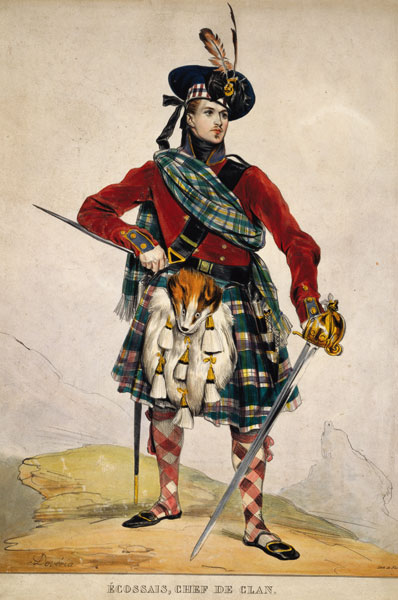
Battles of the 16th Century The 16th century was a blood-soaked era for the MacFarlanes.
-
Battle of Glasgow Muir (1544): The Chief led 300 men to support the Earl of Lennox but was narrowly defeated.
-
Battle of Pinkie Cleugh (1547): The clan suffered grievously against the English; the 13th Chief, Duncan, and his uncle were killed along with many clansmen.
-
Battle of Langside (1568): This was the clan's finest military hour. Fighting against Mary, Queen of Scots (who was then in rebellion against the Crown), the MacFarlane Chief Andrew led 300 clansmen to turn the flank of the Queen's army. Their bravery was decisive. As a reward, the Regent Moray granted the clan their Crest (a demi-savage holding a sheaf of arrows) and the Motto "This I'll Defend," signifying their defense of the infant King James VI.
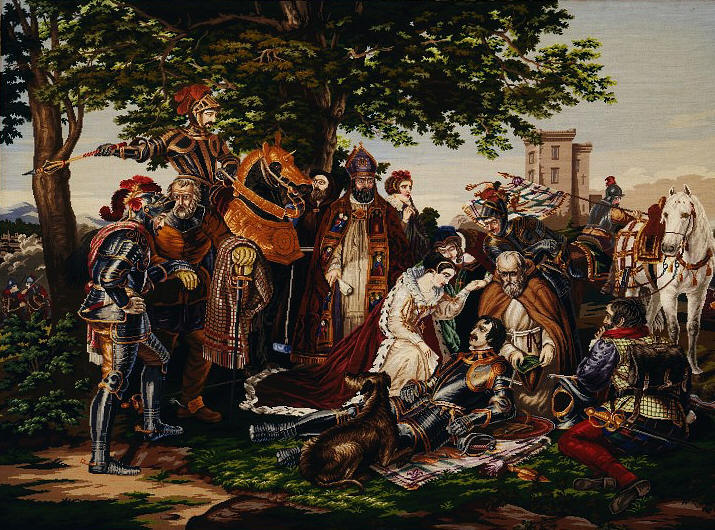
"MacFarlane's Lantern" and the Cattle Raids The MacFarlanes were notorious for their night raids to "lift" (steal) cattle from their Lowland neighbors. They were so proficient at this that the full moon became known locally as "MacFarlane's Lantern." Their gathering place was the small Loch Sloy near the foot of Ben Vorlich, giving them their famous war cry: "Loch Slòigh!"
This behavior led to frequent conflict. In 1624, following the Battle of Glen Fruin where they aided the MacGregors in killing 80 men of Clan Colquhoun, many MacFarlanes were tried, executed, or forced to flee. They retreated to island strongholds like Inveruglas and Eilean a’ Bhùth (Island I Vow) on Loch Lomond, which were later burned by Cromwell's forces in the mid-17th century.
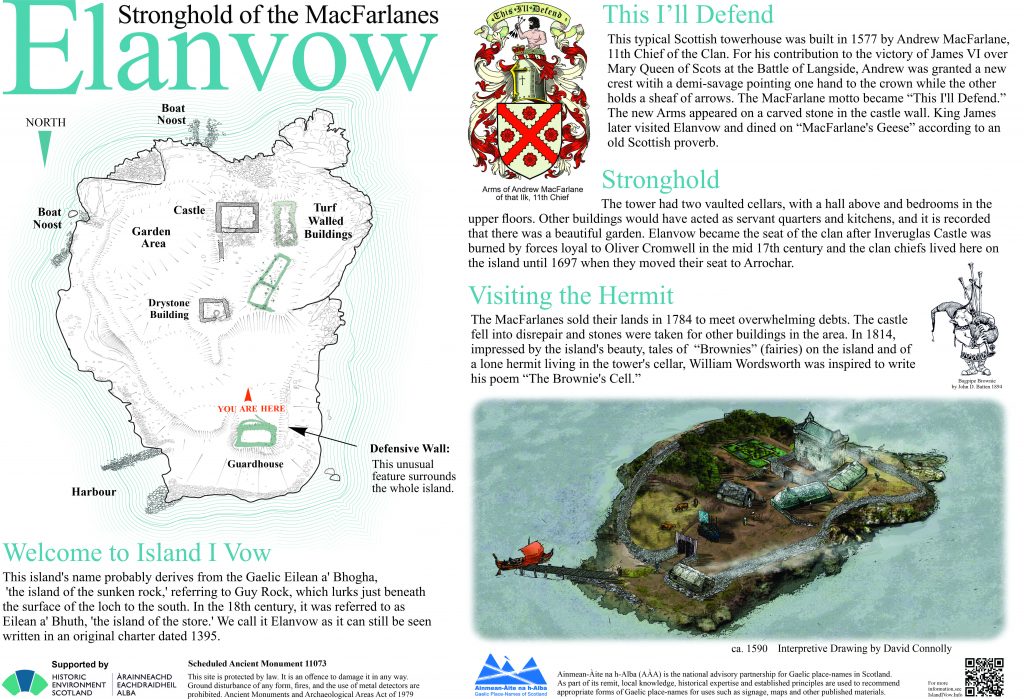
The Scholar Chief and the End of an Era By the 18th century, the clan’s character changed. The 20th Chief, Walter MacFarlane (1705–1767), was not a raider but a renowned antiquarian and scholar, famous for preserving Scottish historical records. However, the financial burden of the past weighed heavily. Upon his death in 1767, the ancestral lands of Arrochar were sold off to pay debts, ending 600 years of ownership.
The direct male line of the Chiefs became dormant in 1866 with the death of William MacFarlane. Many clansmen emigrated to Ireland and America during the Highland Clearances and potato famines, spreading the name (often spelled McFarland) across the globe. Today, the clan is armigerous, waiting for a rightful heir to reclaim the Chiefship.